
Poetry as a Living Dialogue: Revisiting Serena Agusto‑Cox
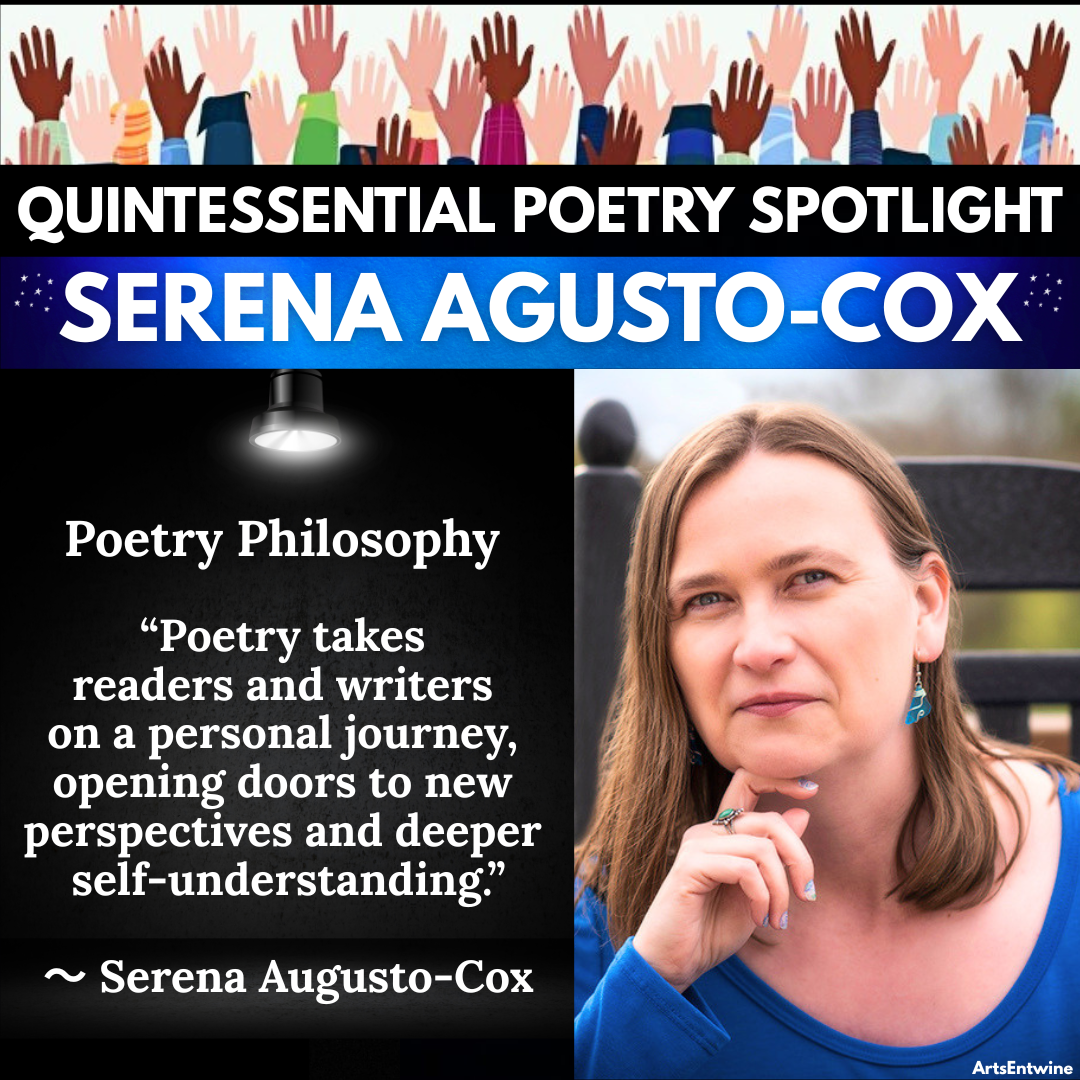
A return to Serena Agusto‑Cox’s 2021 interview and the insights that still resonate
In a world saturated with noise, poetry has always offered a place where language can breathe—where truth can arrive quietly, steadily, and without apology. Recently, I revisited my 2021 interview with Serena Agusto‑Cox, a longtime member of the Quintessential Poetry community. Listening again, I was struck by how fully her voice had continued to blossom in the years since. What she shared then about poetry as a “living, breathing thing” felt even more resonant now, especially with the release of her debut collection, Echoes Carry Amazon.com: Echoes Carry: 9781957372204: Serena Agusto-Cox: Books
Revisiting that earlier dialogue reminded me that Serena had always written from a place of profound attentiveness—to memory, to community, to the emotional undercurrents that shape our lives. Hearing her younger self speak about poetry’s capacity to surprise, to reveal, to transform, I could trace a clear line to the poet she had become: courageous, tender, unafraid of the shadows, and committed to telling the truth with grace.
Revisiting Her 2021 BookFest Reading
During the same year, Serena appeared at the Literary Hill BookFest 2021, sharing a selection of poems that now feel like early markers of the voice she would later refine in Echoes Carry. Watching that video again, I was reminded of how deeply she was already engaging themes that continue to define her work: mental health, personal identity, family history, and the quiet devastations of the pandemic era.
She read about the physical and emotional weight of migraines, the pressures surrounding beauty and self‑image, the isolation children endured during COVID‑19, and the legacy of her immigrant father. She explored self‑love, internal shadows, and the lingering scars of past heartbreak. Even then, her poems carried the same qualities that shine in her debut collection—tenderness, courage, and a willingness to look directly at the harsh truths without losing sight of the light. That 2021 reading was not just a performance; it was an early map of the poet she would become.
A Lifelong Companion
In our conversation, Serena described poetry as a companion that evolved alongside her—a presence that surprised her just when she thought she understood its contours. For her, a poem often began with a personal spark, but through revision and reflection, it became something larger than the self. Poetry, in her view, behaved like a living entity: shifting, breathing, and revealing new truths with each return.
Writing Toward the Hard Truths
One of the most powerful threads in our discussion centered on Serena’s willingness to confront difficult subjects. Her chapbook in progress at the time addressed the ongoing crisis of gun violence in America. As a mother, she carried the weight of these stories intimately. Her poems did not sensationalize tragedy; instead, they bore witness. They asked us to look directly at the pain our communities endured and to imagine a world where love, not violence, shaped our collective future.
The Personal as Universal
Serena’s poetry was also grounded in the intimate details of everyday life. She wrote about her daughter, about the joys and challenges of working motherhood, and even about the whimsical adventures of her dog. These personal narratives opened into universal themes of love, grief, joy, and resilience. Her new collection, Echoes Carry, gathered these moments with tenderness and honesty. The poems moved across generations, holding both the sweetness of memory and the shadows that shaped it.
Poetry as Community
Although poetry was often written in solitude, Serena emphasized that it was completed in community. She spoke about the importance of writing groups, trusted readers, and the shared vulnerability that allowed a poem to evolve. Her participation in local poetry circles highlighted a truth that many poets understand but seldom express: a poem reaches its complete essence when it is embraced, interrogated, and lauded by others.
Language as Catalyst
During the episode, Serena read several powerful pieces—"One City, One Heartache,” “Schoolyard Games,” and others—that demonstrated her ability to use language as a catalyst for reflection and change. Whether addressing societal issues or intimate personal moments, her poems invited readers to pause, to feel, and to reconsider what they thought they knew.
A Journey Still Unfolding
As she continued refining her chapbook and exploring the possibilities of a larger collection, Serena remained committed to elevating poetry as a tool for cultural dialogue and emotional truth. Her work embodied the spirit of poetry itself—persistent, transformative, and always reaching toward more profound understanding.
To emerging poets who hesitated to share their voices, Serena offered simple but powerful encouragement: do not be afraid to put your words into the world. Every voice mattered. Every story added to the collective tapestry of human experience.
I am grateful to Serena Agusto-Cox for her time, insights, and unwavering belief in the power of poetry. Revisiting our conversation—and her 2021 reading—reminded me that poetry is more than just words; it is lived, shared, and constantly reborn. And, as I always say, let the poetry ring.
Dr. Michael Anthony Ingram

Host and Producer
Dr. Michael Anthony Ingram is a retired associate professor of Counselor Education and Supervision, social change activist, acclaimed poet and spoken word artist. His poetry explores themes of power, identity, and oppression. He has traveled widely, giving lectures and workshops on cultural competence, mental health awareness, and the development of empathy through poetry.
In addition to his podcasting work, Dr. Ingram is the Founder and Executive Director of the DC Poetry Project, Inc. Based in Washington, D.C., the DCPP seeks to promote awareness of societal, cultural, educational, and health issues through poetry and performance art. The organization is dedicated to fostering partnerships, strengthening communities, and encouraging volunteer support via poetic and artistic endeavors.
In May 2023, Dr. Ingram was featured in an interview with Heart of Hollywood magazine (https://www.heartofhollywoodmagazine.com/post/exclusive-interview-with-the-host-and-producer-of-quintessential-listening). He has been nominated for a Pushcart Prize in poetry. His eagerly awaited second poetry collection, Metaphorically Screaming" is expected to make a significant impact.

Listening Again: What Four Years Revealed About Celaine Charles’ Poetic Voice
